The Critical Role of Proper Attic Ventilation in Roof Health
When homeowners think about their roof, they usually focus on the visible materials—the shingles, the metal panels, or the flashing. However, one of the most vital components of a healthy, long-lasting roofing system is entirely hidden from view: attic ventilation. Proper airflow within the attic space is not just about temperature control; it is essential for protecting the structural integrity of the roof and maximizing the lifespan of the roofing materials.
Key Takeaways
- Attic ventilation is a critical, often overlooked component of a healthy roofing system.
- Proper airflow prevents extreme heat buildup, which can bake shingles from the inside out.
- Ventilation controls moisture generated inside the home, preventing wood rot and mold growth.
- An effective system requires a balance of intake vents (soffits) and exhaust vents (ridges).
- Alpine Roofing Construction can evaluate and optimize your attic ventilation to protect your low slope and steep slope roofing systems investment.
Preventing Heat Buildup
In the Dallas/Fort Worth area, summer temperatures frequently soar, and the heat radiating from the sun can turn an unventilated attic into an oven. Temperatures inside a poorly ventilated attic can exceed 150 degrees Fahrenheit. This trapped, extreme heat transfers directly to the roof decking and the underside of the shingles.
Over time, this constant baking causes asphalt shingles to dry out, become brittle, and lose their protective granules much faster than they would under normal conditions. This premature aging significantly reduces the lifespan of the roof, leading to curling, cracking, and eventual failure. Proper ventilation allows this hot air to escape, keeping the roof deck cooler and preserving the integrity of the shingles.
Controlling Moisture
While heat is a primary concern in the summer, moisture management is a year-round necessity. Everyday household activities, such as showering, cooking, and doing laundry, generate significant amounts of warm, moist air. This warm air naturally rises and enters the attic space.
If the attic is not properly ventilated, this moisture becomes trapped. When the trapped moisture meets the cooler underside of the roof deck (especially during colder months or cool nights), it condenses into water droplets. This continuous condensation leads to wood rot in the rafters and decking, rust on metal fasteners, and the proliferation of mold and mildew. An effective ventilation system constantly cycles fresh air through the attic, carrying the moisture outside before it can cause damage.
The Balance of Intake and Exhaust
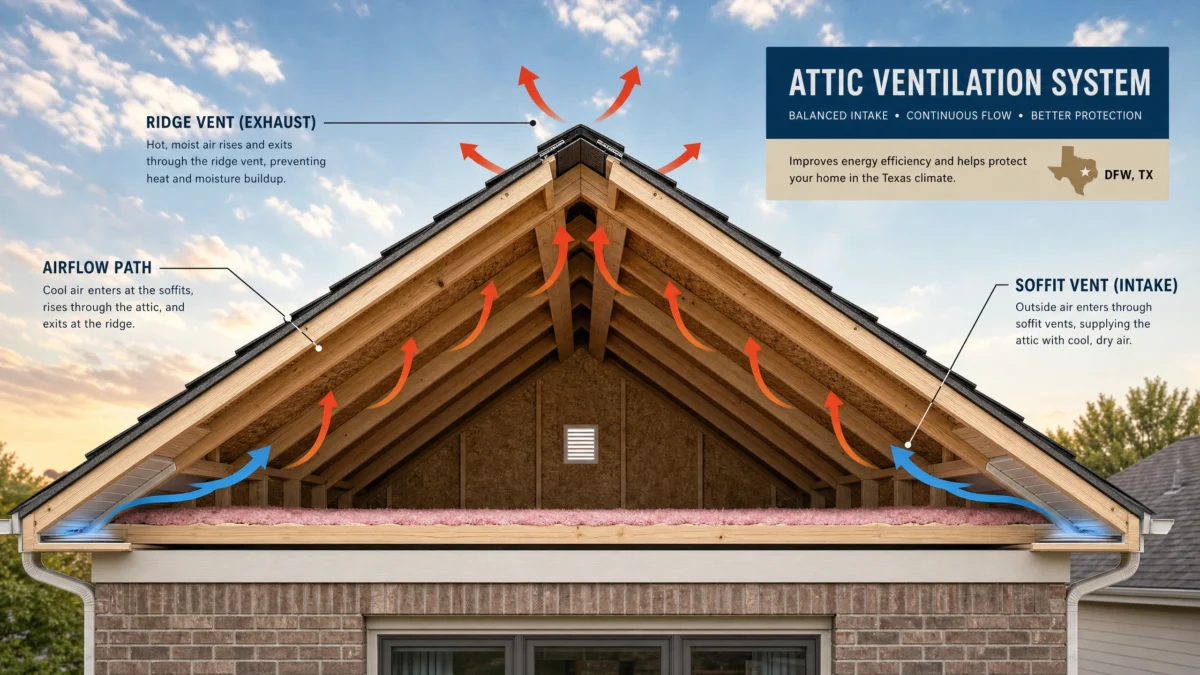
A proper attic ventilation system relies on a continuous, balanced flow of air. This is achieved through a combination of intake and exhaust vents.
Intake vents, typically located in the soffits (the underside of the eaves), allow cool, fresh air to enter the lower part of the attic. Exhaust vents, usually located at or near the peak of the roof (such as ridge vents), allow the hot, moist air to escape. As the hot air rises and exits through the top, it creates a natural draw that pulls fresh air in through the bottom. If this balance is disrupted—for example, if intake vents are blocked by insulation—the system cannot function effectively.
Conclusion
Proper attic ventilation is not an optional upgrade; it is a fundamental requirement for a healthy roof. It protects against the destructive forces of extreme heat and trapped moisture, ensuring that your roofing materials reach their full expected lifespan. If you are unsure about the state of your attic airflow, contact Alpine Roofing Construction. Our experts can evaluate your current ventilation system and recommend the necessary adjustments to protect your home and your investment. Contact us via our Google Business Profile to schedule an evaluation.