
How to Identify Hail and Wind Damage on Your Residential Roof
The aftermath of a Texas spring storm can be chaotic. Once the severe weather passes, the immediate concern for many homeowners in the Dallas/Fort Worth area is assessing the damage. While some roof damage is glaringly obvious, such as a collapsed section or a large branch piercing the structure, other signs are subtle and easily missed by the untrained eye. Knowing how to identify hail and wind damage on your residential roof is critical for timely repairs.
The Urgency of Identifying Damage
When a storm hits, the integrity of your roof is put to the test. Even minor damage, if left unaddressed, can lead to significant issues over time, including water leaks, mold growth, and structural deterioration. Identifying damage quickly allows you to take action before the next rainstorm exacerbates the problem.
Signs of Hail Damage
Hailstorms are a frequent occurrence during the Texas spring, and they can wreak havoc on residential roofs. Hail damage can vary depending on the size of the hail, the wind speed, and the age of your roof. Here is what to look for:
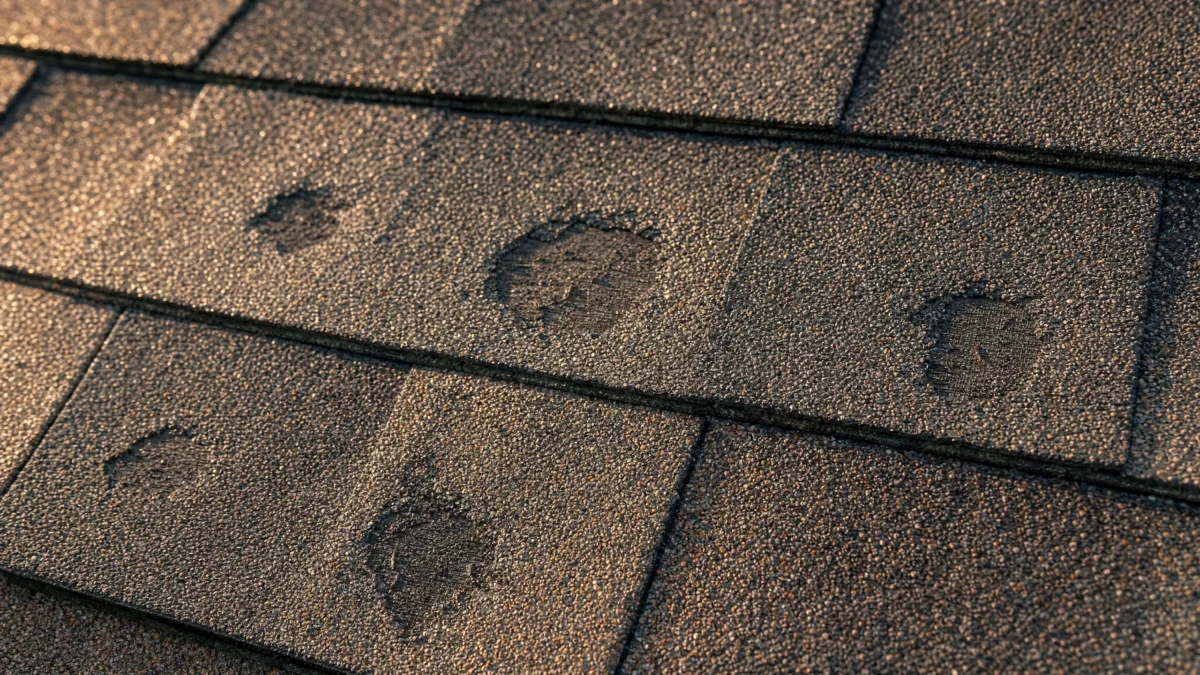
- Bruising on Shingles: Hailstones can leave dark, circular “bruises” on asphalt shingles. These impact marks may feel soft to the touch, indicating that the underlying mat has been compromised.
- Missing Granules: The protective granular coating on shingles can be knocked loose by hail. If you notice an accumulation of granules in your gutters or downspouts after a storm, your roof may have sustained damage.
- Cracking: Large hail can cause circular cracking patterns on shingles, weakening their ability to shed water effectively.
- Dents on Metal Fixtures: Check the metal components of your roof, such as vents, flashing, and the chimney cap, for dents or dings.
Signs of Wind Damage
High winds can be just as destructive as hail, especially when they reach severe storm levels. Wind damage often affects the edges of the roof and areas where the roofing material is already loose or aging.
- Lifted Shingles: Strong gusts can get underneath shingles, lifting them up and breaking the seal that holds them down. This exposes the underlayment to the elements.
- Creased Shingles: When a shingle is lifted and folded back by the wind, it can develop a permanent crease. This weakens the shingle and makes it more susceptible to tearing off in future storms.
- Blown-Off Shingles: The most obvious sign of wind damage is missing shingles, leaving patches of the roof completely exposed.
- Damaged Flashing: Wind can peel back or loosen the metal flashing around roof penetrations, creating prime entry points for water.
Collateral Damage
Sometimes, the easiest way to determine if your roof has been damaged is to look at the rest of your property. Collateral damage is a strong indicator that your roof likely took a hit as well.
- Gutters and Downspouts: Look for dents, dings, or misalignments.
- Siding and Windows: Check for cracks, holes, or chipped paint on your siding and window frames.
- Air Conditioning Units: Inspect the outdoor HVAC unit for dented fins or impact marks.
Next Steps
If you suspect your roof has sustained hail or wind damage, it is important to act quickly. Document the damage by taking photos from the ground of any visible issues or collateral damage. However, for a safe and accurate assessment, it is best to rely on professionals. Contact Alpine Roofing Construction for a thorough inspection. Our shingle roofing services experts are ready to help. Learn more about us on our homepage. Our experts can identify both obvious and hidden damage, providing you with a clear understanding of your roof’s condition and the necessary steps for repair.