How Can Poor Drainage Around Rooftop HVAC Units Cause Water Problems on Low-Slope Roofs?
Poor drainage around rooftop HVAC units can cause water to accumulate on low-slope commercial roofs, increasing the risk of membrane deterioration, leaks, and moisture damage. HVAC equipment curbs, support structures, and blocked drainage pathways can interfere with water flow. Professional roof inspections, properly maintained flashing, and effective drainage systems help protect commercial buildings from these problems.
Rooftop HVAC systems are common on commercial buildings throughout Dallas-Fort Worth, including office buildings, retail centers, warehouses, and industrial facilities. While these systems help maintain comfortable indoor environments, their placement can create challenges for commercial roof drainage.
Alpine Roofing Construction specializes in commercial roofing solutions, including low-slope roofing systems, roof repairs, and maintenance. The company understands how rooftop equipment, roofing membranes, flashing, and drainage components must work together to protect a building.
In North Texas, where heavy thunderstorms can bring substantial rainfall, maintaining proper drainage is especially important. By identifying potential roofing problems around HVAC equipment, commercial property owners can take proactive steps to protect their investment and reduce the likelihood of unexpected water intrusion.
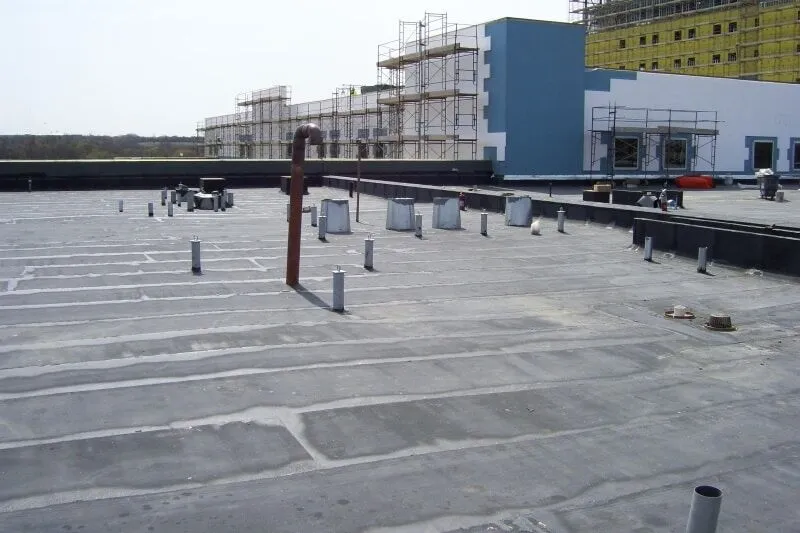
How Rooftop HVAC Equipment Affects Low-Slope Commercial Roof Drainage
Low-slope commercial roofs are designed to direct rainwater toward drains, scuppers, or other designated drainage points. However, rooftop HVAC equipment can interrupt this process when surrounding roofing details are improperly designed, damaged, or poorly maintained.
Understanding where drainage problems develop can help property managers recognize warning signs and determine when professional roofing services are necessary.
Why Does Water Collect Around Rooftop HVAC Units?
Water often collects around rooftop HVAC units when equipment curbs, support structures, or debris prevent rainwater from reaching the roof’s drainage system.
Although commonly called flat roofs, commercial low-slope roofs are designed with enough slope to encourage water movement. When that slope is interrupted, localized ponding may develop.
Common causes include:
- HVAC curbs that obstruct natural drainage pathways
- Debris accumulating behind rooftop equipment
- Low spots or depressions in the roofing surface
- Blocked drains or scuppers near mechanical equipment
- Improperly installed or deteriorating flashing
- Changes to roof drainage following equipment installation
These conditions may become more noticeable after heavy rainfall.
Property owner tip: After installing or replacing rooftop HVAC equipment, schedule a professional roofing inspection to verify that surrounding flashing, membrane connections, and drainage pathways remain in good condition.
Can HVAC Condensate Cause Water Problems on Commercial Roofs?
Yes. HVAC condensate can contribute to localized moisture problems when drainage lines discharge water onto roofing surfaces or into areas where water cannot drain effectively.
Commercial air-conditioning systems remove moisture from indoor air during normal operation. That moisture must be discharged through an appropriately designed condensate drainage system.
When condensate lines become blocked, disconnected, or improperly routed, water may collect near rooftop equipment.
Potential warning signs include:
- Persistent wet areas around HVAC units
- Water accumulation during periods without rainfall
- Staining or deposits on roofing surfaces
- Moisture around equipment supports or penetrations
- Recurring dampness near rooftop mechanical installations
These conditions do not necessarily indicate a roof membrane failure. In some cases, the source may be the HVAC condensate system rather than the roofing materials.
An important distinction: Alpine Roofing Construction focuses on commercial roofing systems, including membrane condition, flashing, drainage, and roofing repairs. Mechanical condensate drainage problems should be evaluated and corrected by a qualified HVAC professional.
When moisture problems involve both roofing and mechanical equipment, coordination between roofing and HVAC contractors may be necessary.
How Can Ponding Water Damage a Low-Slope Commercial Roof?
Persistent ponding water can increase stress on roofing materials, expose vulnerable seams and flashing to prolonged moisture, and contribute to water intrusion when defects are present.
The extent of potential damage depends on the roofing system, drainage design, existing roof condition, and how long water remains on the surface.
Commercial roofing systems such as TPO are designed to provide durable waterproofing protection. However, even a properly installed roofing membrane benefits from effective drainage and regular maintenance.
Potential consequences of recurring ponding water include:
- Increased exposure of seams and flashing to moisture
- Accumulation of dirt and organic debris
- Deterioration around rooftop equipment curbs
- Additional weight from retained water
- Greater risk of leaks where roofing defects already exist
- Accelerated wear in vulnerable roofing areas
According to the National Roofing Contractors Association (NRCA), routine inspections and preventive maintenance are important parts of commercial roof management.
Some temporary standing water may occur following rainfall, but persistent or recurring ponding should be professionally evaluated.
For Dallas-Fort Worth commercial properties, this is especially important during spring storm season, when intense rainfall can quickly expose existing drainage restrictions.
How Can Commercial Roofing Contractors Address Drainage Problems Around HVAC Equipment?
Commercial roofing contractors can identify drainage restrictions, evaluate roofing materials, inspect equipment flashing, and recommend appropriate repairs or improvements.
The first step is determining whether water accumulation results from the roof’s drainage design, deteriorating roofing components, or an obstruction near rooftop equipment.
A professional commercial roof evaluation may include:
- Inspecting roof slope and drainage pathways. Identifying areas where water collects and determining whether it can reach designated drainage points.
- Evaluating roofing membranes. Checking TPO or other low-slope roofing materials for punctures, deterioration, and damaged seams.
- Examining HVAC curb flashing. Looking for gaps, loose materials, deteriorated seals, or other vulnerable connections.
- Checking drains and scuppers. Identifying debris or restrictions that prevent effective water movement.
- Reviewing previous roofing repairs. Determining whether recurring problems indicate a larger drainage or waterproofing concern.
- Recommending appropriate corrective work. Identifying whether repairs, flashing improvements, or drainage modifications may be necessary.
In some situations, tapered insulation may help improve drainage by creating a more effective slope toward designated drainage points.
However, the appropriate solution depends on the existing roofing system, building structure, and overall drainage design.
Alpine Roofing Construction’s experience with commercial low-slope roofing systems allows the company to help property owners evaluate roofing conditions and identify suitable repair or maintenance options.
When Should Property Owners Schedule a Roof Drainage Inspection?
Commercial property owners should schedule a professional roofing inspection when water repeatedly collects around HVAC equipment, roofing materials show visible deterioration, or unexplained interior moisture appears.
Inspections are also valuable after significant storms, rooftop equipment replacements, or construction work involving roof penetrations.
Warning signs that deserve attention include:
- Water remaining near HVAC equipment after surrounding roof areas have dried
- Repeated leaks around rooftop mechanical installations
- Loose or deteriorating equipment flashing
- Visible membrane damage near equipment supports
- Recurring drainage problems following heavy rainfall
Routine inspections can help identify developing problems before they require more extensive repairs.
For commercial facilities throughout Dallas-Fort Worth, coordinating roofing inspections with regular building maintenance can support more effective long-term property management.
Frequently Asked Questions About HVAC Drainage and Commercial Roofs
Can rooftop HVAC equipment cause a commercial roof leak?
Yes. Rooftop HVAC equipment can contribute to leaks when surrounding flashing, roof penetrations, or membrane connections are damaged or improperly installed. A professional roofing inspection can help identify whether the problem originates from the roofing system.
Is standing water around rooftop HVAC equipment normal?
Temporary standing water may occur after rainfall, but persistent or recurring ponding should be evaluated. Drainage restrictions, insufficient slope, or damaged roofing components may contribute to the problem.
Can tapered insulation improve drainage around rooftop HVAC units?
Yes. Properly designed tapered insulation can help direct water away from equipment and toward roof drains. A commercial roofing contractor can determine whether this approach is suitable for the existing roof.
Should an HVAC contractor or roofing contractor inspect water around rooftop equipment?
A commercial roofing contractor should inspect roof membranes, flashing, slope, and drainage components. An HVAC contractor should evaluate condensate lines and mechanical drainage. Some situations require both professionals to identify and correct the source of moisture.
Protect Your Commercial Roof With Alpine Roofing Construction
Poor drainage around rooftop HVAC equipment can create ongoing moisture problems that affect the performance of a commercial roofing system. Identifying drainage restrictions, maintaining waterproofing details, and addressing deteriorating roofing materials can help protect commercial properties from unnecessary damage.
Alpine Roofing Construction provides commercial roofing expertise to help property owners and facility managers evaluate roofing conditions, identify potential concerns, and plan appropriate maintenance or repairs.
Concerned about standing water or drainage problems around your rooftop HVAC equipment? Contact Alpine Roofing Construction today to discuss professional commercial roof inspections, repairs, and maintenance solutions for your Dallas-Fort Worth property.